
Functioning Citizenship at the Water’s Edge: Everyday Democracy in Global Port Cities
ABOUT THE PROJECT
The Edge and the Political
There is something in the waterfront, in that edge condition, in the boundary between the sea and the city, that seems to generate a particular kind of political consciousness. This project sets out to understand what that is.
Port cities are among the most intensely global places on earth. Vast logistics infrastructures move goods, capital, and people across oceans. Yet behind every container terminal, every deep-water berth, every reclaimed waterfront, there are communities whose lives are shaped by forces they did not choose and cannot fully see. The persistent temptation is to see these communities as victims of structural forces. This project refuses that framing.
The core question is: how do port city communities make themselves into political subjects? How do people who live and work at the edge of enormous logistical systems, container ports, shipping corridors, industrial waterfronts, find ways to act, to claim space, to exercise what we call functioning citizenship? We are interested not only in formal or informal rights, but in the everyday acts through which people assert presence and make sense of belonging in cities defined by global trade.
We work comparatively across four port cities: Bremerhaven, Valparaíso, Lüderitz, and Singapore. We move between archives and streets, between policy documents and harbour-side conversations, between colonial histories and present-day logistics politics. We work alongside artists, community partners, and public institutions to ensure the research speaks beyond academia.
We position ourselves at the intersection of critical logistics, postcolonial political economy, and everyday politics, advancing debates on what communities do when global infrastructure arrives at their doorstep.
METHODOLOGY INTRO / CASE CITY RATIONALE
We followed the ships
Our comparative framework was not chosen from a map. It emerged from the archives of the Deutsches Schifffahrtsmuseum. When we traced the historical routes of German maritime trade, the same four port cities appeared again and again. They were connected not by geography but by commerce, colonialism, and the movement of goods across centuries.
Bremerhaven and Lüderitz
Connected by the history of German colonial rule in Namibia (Deutsch-Südwestafrika, 1884–1915). Ships departed Bremerhaven for Lüderitz carrying settlers, soldiers, and trade goods; they returned carrying diamonds and colonial produce. The colonial infrastructure of that trade — the port, the railway, the road network — still structures everyday life in Lüderitz today.
Bremerhaven and Valparaíso
Connected by the saltpeter trade. In the late nineteenth century, Chilean saltpeter (salitre) — mined in the Atacama Desert and shipped from Valparaíso — was one of the most important commodities in the German agricultural and chemical industries. German trading houses dominated the trade. The port of Valparaíso was shaped by this export economy, and its working-class waterfront communities still bear the marks of that history.
Singapore
Singapore appears in our trade routes as a node through which goods, ships, and people from all four cities passed. Singapore's port is one of the largest in the world.
Project Information
Title: Functioning Citizenship at the Water's Edge
Funder: Volkswagen Foundation
Grant No.: 0202634
Total Funding: 1,274,600 Euro
Duration: 2025 – 2029
Host Institution: DSM, Bremerhaven
Partner Institutions: Universität Bremen, Universität Hamburg, ITF Trust Funds
Principal Investigator: Prof. Dr. Ruth Schilling

Ansicht auf das Bangert-Gebäude.
Credit: DSM / Annica Müllenberg
FOUR CASE CITIES Case Cities
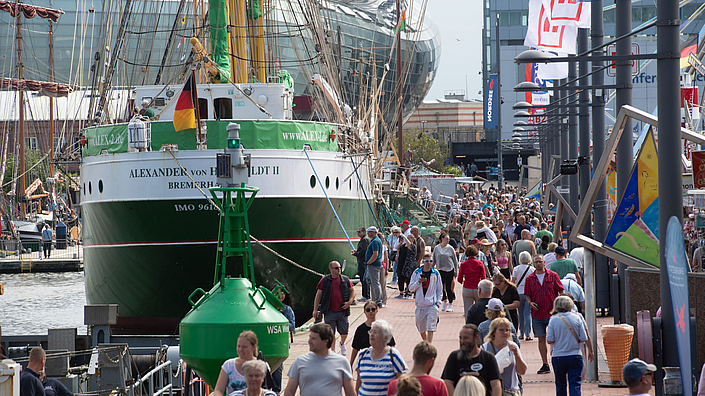
-Bremerhaven
Home institution and northern anchor. A post-industrial port city navigating deindustrialisation, migration, and the politics of maritime heritage. WP1 (archive), WP2 (ethnography) and WP3 (art) all have a component in Bremerhaven.
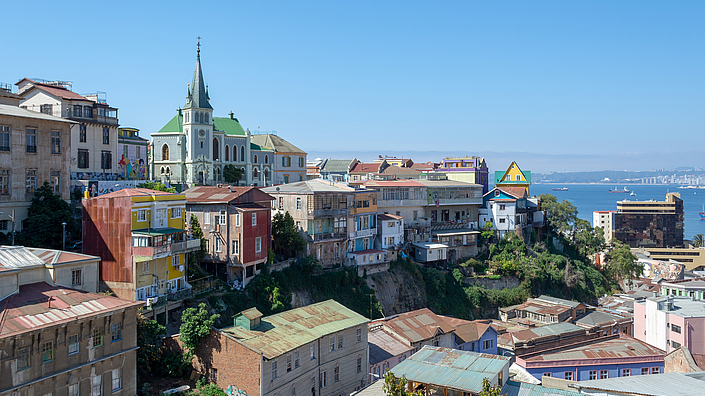
Valparaíso
A UNESCO World Heritage port city on the Chilean coast. Shaped by saltpeter trade, German merchant capital, and decades of labour politics. Its hillside communities (cerros) produced some of the most distinctive port-city cultures in the Americas.
Lüderitz
The southernmost port city in Namibia, founded as a German colonial outpost. Site of the first German genocide in Africa (1904–08). A small city with a vast colonial shadow, where the fishing industry, the diamond economy, and informal settlements coexist.
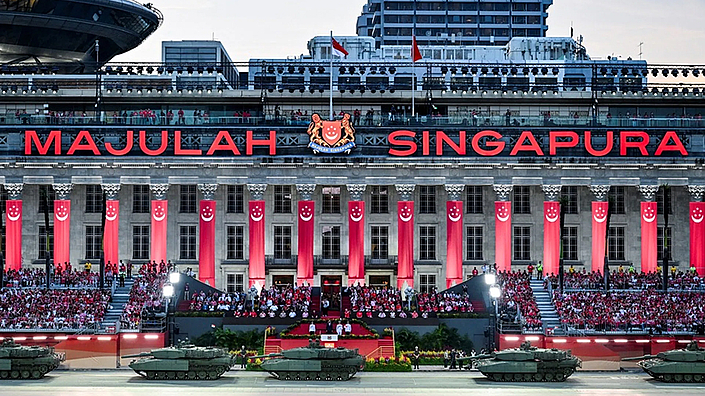
Singapore
The southernmost port city in Namibia, founded as a German colonial outpost. Site of the first German genocide in Africa (1904–08). A small city with a vast colonial shadow, where the fishing industry, the diamond economy, and informal settlements coexist.
THEORETICAL FRAMEWORKS
Three Frameworks
We position ourselves at the intersection of three bodies of scholarship. Each illuminates a different dimension of what happens at the port city's edge. Together, they allow us to move between the structural and the everyday, the global and the local, the historical and the contemporary.
Framework I Critical Logistics
Infrastructure is not neutral. Logistics systems — ports, roads, containers, shipping lanes — are the material scaffolding of capitalist accumulation. Their expansion has historically required the dispossession of communities, the appropriation of coastal land, and the coercion of mobile labour. We depart from and extend this literature by asking what communities do next: the micro-level stories that macro-level logistics scholarship has left out.
Cowen · Easterling · Danyluk · Higazy · Talib
Framework II Postcolonial Political Economy
The four port cities in this project were shaped by colonial trade — German, British, Dutch, Chilean. Colonial infrastructures of extraction did not disappear with formal decolonisation. They persist in the built environment, in land tenure regimes, in racialised labour markets, and in the spatial organisation of waterfront neighbourhoods. We engage with postcolonial political economy to understand the long-term and uneven geography of port city life.
Zeiderman · Dorsch · Maheswaran · Rassool · Hein
Framework III Everyday Politics & Citizenship
Citizenship is not only a legal status. It is a practice — claimed, contested, and sometimes refused in daily life. We draw on the tradition of everyday politics scholarship to understand how port city communities express agency and political subjectivity: not only through protest, but through quiet encroachment, spatial negotiation, artistic practice, and the assembly of micro-infrastructures of survival and belonging.
Chatterjee · Bayat · Isin · Tsing · Harvey
METHODOLOGY & WORK PACKAGES
Research Design
We use a comparative, multi-sited, mixed-methods design. The project combines archival historical research with ethnographic fieldwork and participatory art practice. All three approaches run in parallel across the four cities.
Our methods include:
— Ethnographic fieldwork with port city communities (minimum 3 months per city)
— Historical and archival research
— Interviews and focus group discussions
— Policy document and newspaper analysis
— Participatory art practice and community co-creation
Work Package I — Archival & Historical Research
Colonial trade routes, port city histories, maritime heritage. Focus: memory, museum studies, and the long-term transformation of waterfront communities.
Work Package II — Ethnographic Research
Focus: Everyday life, citizenship practices, community political agency in contemporary port cities, informal economy, spatial politics.
Work Package III — Participatory Art Practice
Collaborative artistic work with waterfront communities.
Project Team: Who We Are
-Principal Investigator
Prof. Dr. Ruth Schilling
Deutsches Schifffahrtsmuseum, Bremerhaven

Dr. Katharina Bothe
Co-Principal Investigator
Deutsches Schifffahrtsmuseum, Bremerhaven
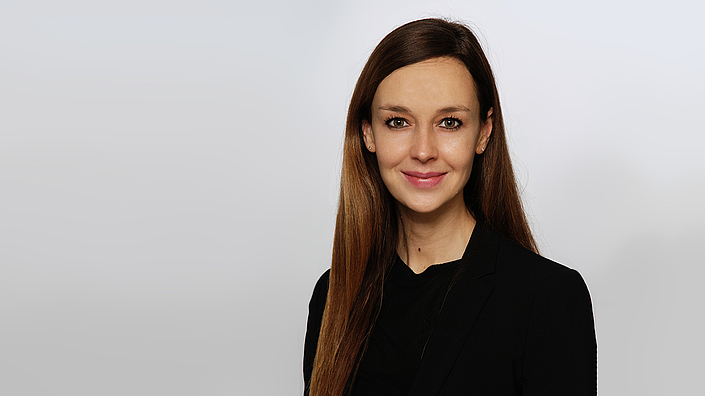
Dr. Mudassar Munir
Project Coordinator & Postdoctoral Researcher
Deutsches Schifffahrtsmuseum, Bremerhaven
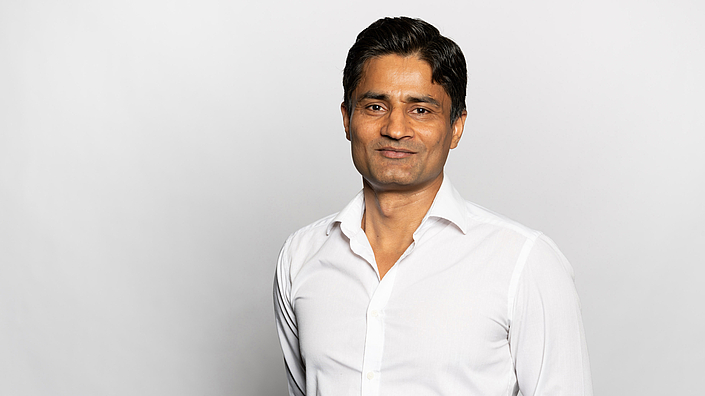
Melanie Garland
Co-PI · Artist in Residence
Deutsches Schifffahrtsmuseum, Bremerhaven
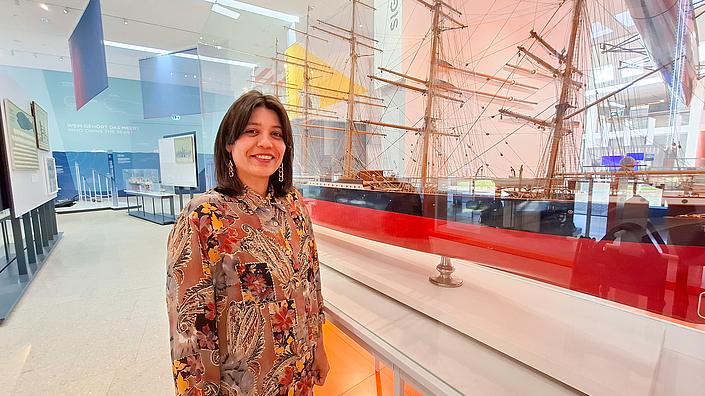
Meike Erichson
Non-Academic Partner
ITF Trust Funds, London
PhD Researcher (WP I)
Doctoral Researcher · Maritime History & Museum Studies
Universität Bremen
PhD Researcher (WP II)
Doctoral Researcher · Ethnography
Universität Hamburg
Advisory Board
Our advisory board brings together leading scholars from across the disciplines and regions the project engages. They guide the research, connect the project to international debates, and ensure our project is grounded in specific expertise.
Prof. Carola Hein
TU Delft, Netherlands
Port city urbanism, maritime heritage, planning history. Leading authority on the historical geography of port cities across Europe and Asia.
Prof. Aihwa Ong
University of California, Berkeley
Citizenship theory, Southeast Asian urbanisation, biopolitics and flexible sovereignty. Foundational scholarship on citizenship beyond the nation-state.
Prof. Alice Mah
University of Warwick, UK
Industrial communities, environmental justice, postindustrial waterfront transformation. Expert on community agency amid large-scale economic restructuring.
Prof. Ciraj Rassool
University of the Western Cape, South Africa
Postcolonial museum practice, African heritage politics, history of race and colonialism in Southern Africa. Essential for the Lüderitz case and for the project's public history dimension.
Dr. Rodrigo Caimanque
Chile
Latin American urban studies, port city politics, labour history. Key interlocutor for the Valparaíso case and for the Chilean historical thread in the project.
Dr. Felicity Ferguson
TBC
Advisory board membership to be confirmed. Role in the project's international scholarly network.