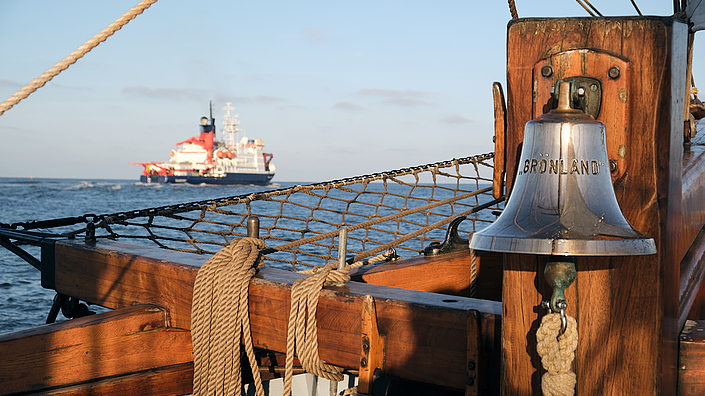
NORDISCHE JAGT GRÖNLAND - The ship then and now
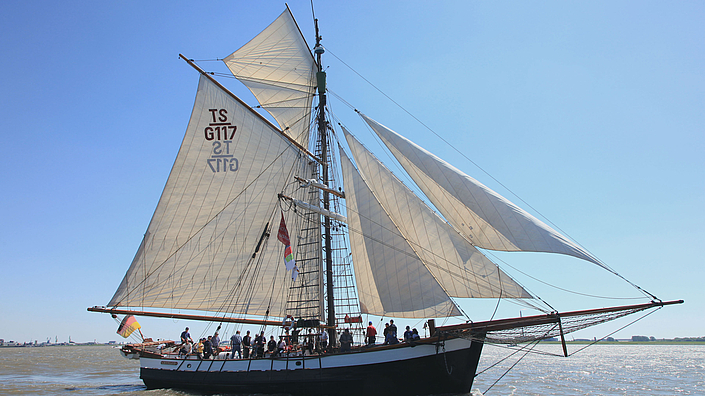
The oldest German polar research ship is the GRÖNLAND. The single-masted ship from 1867 is not just for history buffs. It is still underway today, thanks to many dedicated people
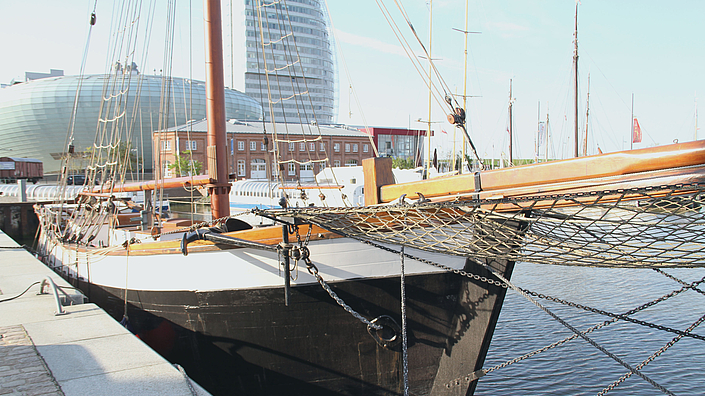
She is the oldest polar research ship in Germany and has been on the water for more than 150 years: the GRÖNLAND. Never again has a sailing ship without an engine ventured this far into the Arctic Ocean. The sailing ship was originally built in Norway in 1867 for fishing. The type of ship: Nordic Hunt. When the ship sailed from Bergen, Norway, in May 1868, the goals for the expedition were ambitious. A way through the pack ice to the North Pole was to be found. The expedition was initiated by the geographer August Petermann from Gotha.
Under the expedition leader Carl Koldewey, the single-masted ship was specially reinforced in the hull area. The oak wood was intended to withstand the pressure of the pack ice as much as possible. On September 15, 1868, after 3,000 nautical miles, she became the first German polar research ship - under the leadership of Captain Carl Koldewey - to reach the northernmost latitude (81° 4.5' N) off Greenland, northwest of Spitsbergen, which can be verified for a sailing ship.
Obviously, Koldewey had made a good choice with the ship. The crew of 12 sailed the ship for more than three months without suffering any damage. The crew did not find its way to the North Pole. But when the ship arrived in Bremerhaven on October 10, 1868, to the cheers of the local population, many new insights into the Arctic had been gained. "Ice thicknesses, ocean currents, weather conditions - much of what the Koldewey expedition brought back is still useful today," says Dr. Lars Kröger, scientific coordinator at the German Maritime Museum.
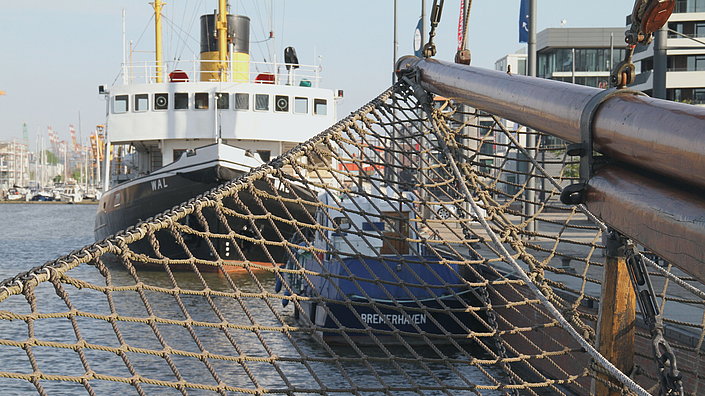
The 29-meter-long single-masted ship was sold to Norway after the expedition, in 1871, and served there as a coastal freighter for about a hundred years before the maritime treasure was rediscovered in 1973 and, thanks to the investment of 120,000 DM, returned to German ownership and to the museum harbor of the German Maritime Museum in Bremerhaven.
.
Dr. Lars Kröger

scientific coordinator museum port
The polar research vessel is currently undergoing refurbishment.
With the purchase of a SEUTE DEERN watch, you are safeguarding history: part of the proceeds will go towards the refurbishment of the GRÖNLAND.

Karl Koldewey: The First German North Polar Expedition in 1868. Justus Perthes, Gotha 1871 The freighter Greenland of the First German Arctic Expedition 1868 © Archiv deutsche Polarforschung
Still underway today, thanks to the crew's dedication to ship and sail
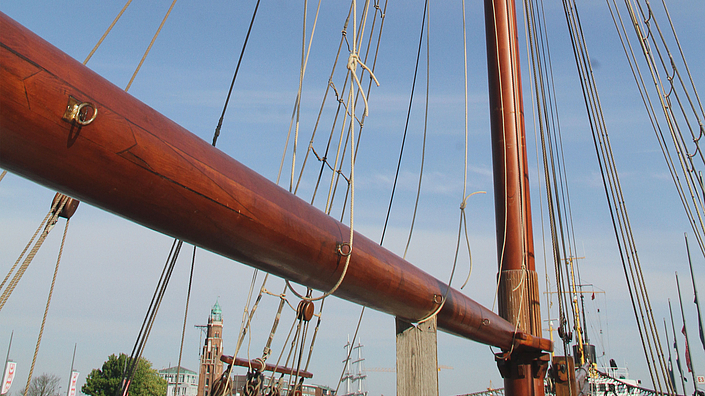
In Bremerhaven, the GRÖNLAND was repaired in accordance with the European guidelines for the conservation and restoration of active traditional ships (Barcelona Charter) from its acquisition in 1973. "For us, this historic polar research ship is an absolute stroke of luck," Lars Kröger enthuses. "Wooden ships like this are normally only built to last a maximum of 40 years." The GRÖNLAND's good condition is also largely thanks to its volunteer crew. Today, around 30 members, twelve of them regulars, take care of the ship in their spare time and keep it running. In the meantime, the ship serves as a floating ambassador for the museum and for Bremerhaven. For example, the exceptional ship has sailed as a climate ambassador as far as Berlin in front of the Bundestag. Currently, the sailer is in the shipyard in Hvide Sande, Denmark.
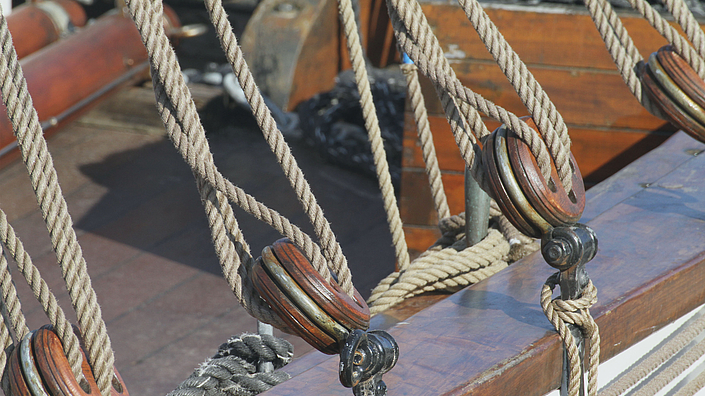
"Sailor's bride is the sea," as actor Hans Albers already knew. The case is different for the polar research ship GRÖNLAND. In fact, it is rather "sailor's bride is the ship" on board the GRÖNLAND. The crew takes care of the sailing ship as if it were the last sailing ship far and wide. But this intensive effort is also necessary, says Dr. Lars Kröger. The studied ship archaeologist and current scientific coordinator of the museum harbor is himself a crew member. "The ship was built in 1867 and is made entirely of wood. Sanding, brushing, mending - there's always something to do." His crew colleague André Benthien stands next to him at the stern. It's work duty - like every second Saturday of the month. "When you're done at the back, you can start again at the front," he grins. He should know. André Benthien stood on the wooden planks of the GRÖNLAND for the first time as a five-year-old. "My father helped restore the ship back then when it arrived here in Bremerhaven from Norway. I've been involved since I was a kid."
More work than time on the water - but still fun
"That's right," his father Rüdiger calls over from the bow of the ship in front. He is still active in the crew and is just putting some lines together. The men spend most of their free time on board the GRÖNLAND, even outside of their fixed work duties. All of them are good craftsmen. Below deck, a new toilet including a mini-cabin has just been installed. All done by themselves, of course. In addition to the regular crew, who also sail the ship, there are a good 20 other helpers. A lot more time goes into maintaining the more than 150-year-old sailing ship than the men can spend with it on the water. Ten hours of work for one hour of sailing is the formula on the GRÖNLAND. Why do it?
"It's just a very special ship," says André Benthin. He runs his hand over the so-called tiller at the stern of the GRÖNLAND. The wooden extension of the rudder at the stern is used to steer the GRÖNLAND. André Benthin often sits here as helmsman when the GRÖNLAND goes out. "You can feel the long history of this ship." And: The intense scent of the kerosene lamps below deck mixes with the old oak wood smell. "My wife always smells it immediately when I have spontaneously been on the ship to work," laughs André Benthin.
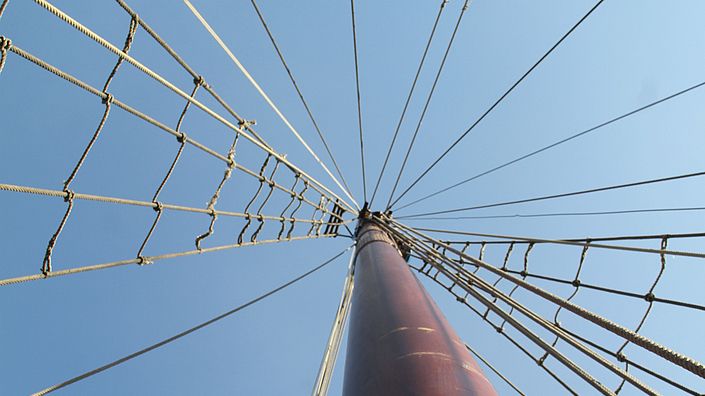
The sailors of the GRÖNLAND are rewarded for all their efforts when they go out to sea. Mostly they sail down the Weser towards Helgoland, but they have also sailed to Norway to the GRÖNLAND's construction yard. "When the sail is up on the 28-meter mast, the sun is shining and the ship is running really well, it makes your heart soar." It's the reward for all the time they spend caring and an obviously intense connection. "Since 1973, a total of six marriages have been divorced in the crew's environment," André Benthin tells us. Sailor's bride is the ship!
Related contributions
-The GRÖNLAND: Beginnings of research shipping
In May 1868 the ship GRÖNLAND set off north to explore a possible sea route to the North Pole. Today, the traditional ship is owned by the German Maritime Museum and is still kept in service.

GRÖNLAND: Welcome committee for the POLARSTERN
After half a year on the southern hemisphere, the POLARSTERN - one of the most important research vessels in the world - has returned to her home port of Bremerhaven. The icebreaker of the Alfred Wegener Institute / Helmholtz Centre for Polar and Marine Research (AWI) was welcomed by the GRÖNLAND off Wangerooge.